





How to Introduce Retinol Into Your Routine
Retinol is one of the most well-researched ingredients in skincare, capable of supporting collagen, softening the look of fine lines, and helping with everything, from uneven texture to the occasional blemish. It also has a reputation for being difficult to begin, and that part isn’t unfounded.
The reassuring truth is that most of the redness, flaking and discomfort people experience comes down to introducing retinol too quickly, rather than the ingredient being wrong for them. Get the introduction right, and it can become one of the most valuable steps in your routine. Here’s how to do exactly that.
What is Retinol?
Retinol is a form of vitamin A, part of a broader family of ingredients known as retinoids. Its real strength lies in how it works deeper within the skin, encouraging it to renew itself more efficiently over time.
In practical terms, retinol can support faster skin cell turnover for a fresher-looking complexion, help stimulate collagen for firmer skin, soften the look of pigmentation and acne scarring, and ease the appearance of fine lines. It can also help balance oil and keep pores clearer, which is part of why it suits such a wide range of skin types.
That versatility is exactly why it’s so popular. But understanding how to add it to your routine, particularly if you’re new to it, makes all the difference.
Best Retinol for Beginners: Start Low and Slow
If you’re just starting out, the most important thing to understand is that more is not better. The best retinol for beginners is usually a lower-strength formula, at 0.1% to 0.3%, introduced gradually, rather than the strongest one on the shelf.
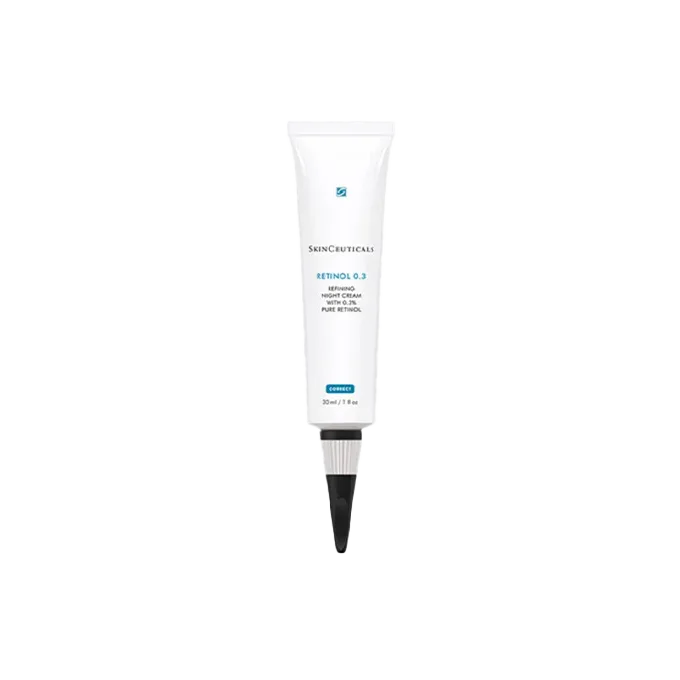
For those introducing retinol for the first time, choosing the right formulation matters. At our clinic, we often recommend professionally selected retinol products that balance effectiveness with tolerability. The SkinCeuticals Retinol 0.3 is a great option for those starting their retinol journey, offering a lower-strength formula designed to help skin gradually adjust while supporting improvements in texture, tone and visible signs of ageing.
A simple way to ease in is the 1-2-3 approach. Use your retinol once a week for the first week, twice a week for the next two, then three times a week for the following three. If your skin is responding well, you can slowly build towards every second night. Should you notice flaking, redness or tightness along the way, simply step back to a lower frequency for a week or so before building up again.
Your skin adjusting to retinol, a process sometimes called retinisation, takes time, and there’s no reward for reaching nightly use quickly.
Retinol for Sensitive Skin: A Gentler Approach
If you have sensitive or dry skin, retinol isn’t off the table; it simply calls for more care. Using retinol for sensitive skin is about supporting your barrier while it adjusts, rather than pushing through discomfort in the hope it settles.
For those who want the benefits of retinol while prioritising comfort, we may also recommend SkinBetter Science AlphaRet Overnight Cream. This advanced retinoid formulation combines a retinoid with other skin-supporting ingredients to help improve the appearance of fine lines, texture and uneven tone, while being designed with tolerability in mind. As this product is available through our clinic rather than online, our Nurses and Clinicians can help determine whether AlphaRet is the right fit for your skin and guide you on how to introduce it into your routine.
It is best to look for an encapsulated retinol, which releases more gradually and tends to be better tolerated. Apply it to clean, dry skin, and consider the “sandwich” method: a layer of moisturiser (without actives) before and after your retinol, to soften its intensity. Pairing it with barrier-supporting ingredients like hyaluronic acid and ceramides makes the whole process far more comfortable.
And if your skin simply isn’t tolerating it, that’s worth listening to rather than persevering through. Sometimes a gentler retinoid, or a different approach altogether, is the wiser path.
The Do’s and Don’ts of Applying Retinol
A few simple habits go a long way towards a smooth introduction.
Do’s:
- Apply retinol at night, to freshly cleansed, dry skin.
- Follow it with a hydrating serum or a ceramide-rich moisturiser to keep your barrier comfortable.
- Commit to daily SPF, since retinol increases your skin’s sensitivity to the sun, and sun exposure will undo much of its good work regardless.
Don’ts:
- Try not to apply retinol in the morning.
- Avoid layering it with vitamin C at the same time. Instead, use vitamin C in the morning for antioxidant protection, and save retinol for the evening, when your skin is in its natural renewal phase.
- Don’t ignore irritation in the name of progress. Easing off for a few days is far kinder to your skin than pushing through and damaging your barrier.
A Word of Caution: Retinol Around Treatments
Retinol is a powerful active, but around in-clinic treatments, it can quickly become too much of a good thing.
Before treatments such as peels, laser or skin needling, retinol usually needs to be paused for a period, as it can leave the skin more sensitive and reactive than usual. Using it too close to a treatment can increase the risk of irritation, prolonged redness, or an uncomfortable recovery.
Afterwards, your skin needs time to settle before actives are reintroduced, and that timing depends entirely on the treatment you’ve had and how your skin responds.
This is why we never leave your skincare to guesswork. A significant part of what we do involves building a considered take-home skincare plan after your treatment, so you know exactly what to use, what to pause, and when to reintroduce actives like retinol. It’s a small detail that makes a real difference to your result.
If you’re using retinol and considering a treatment with us, always let your Nurse or Clinician know. It allows us to tailor both your treatment and your at-home routine so the two work together, rather than against each other.
How Retinol Fits Into a Bigger Picture
Retinol is a wonderful supporting act, though it’s worth being realistic about what it can and can’t do. It supports skin quality beautifully over time, yet it can’t address deeper concerns like volume loss or significant laxity on its own.
For those wanting to support the skin more comprehensively, retinol often sits alongside in-clinic treatments as part of a considered plan. Treatments like bio-remodelling can support hydration and skin quality from within, while a Rejuran skin treatment focuses on the skin’s own repair processes. Where firmness and gradual structural support are the goal, a collagen stimulator treatment may also play a role. Your at-home retinol becomes the daily maintenance that helps protect and extend the results of all of it.
That’s the approach we take at our cosmetic skin clinic in Melbourne, where treatment and skincare are designed to work together, rather than in isolation.
How Long Until Retinol Works?
One of the most common reasons people give up on retinol is that they expect results faster than the ingredient can realistically deliver. Even the best Retinol works gradually for beginners, and patience is very much part of the process.
Most people begin to notice improvements in skin texture and clarity somewhere between eight and twelve weeks of consistent use, with firmness and the appearance of fine lines continuing to improve over a longer period.
The early weeks are more about your skin adjusting than transforming, which is exactly why a slow, steady introduction matters so much. If you can move through the adjustment phase without derailing it through overuse, you give retinol the best possible chance to do what it does well.
Building Retinol Into Your Routine
A gentle cleanser, a barrier-supporting moisturiser, a well-formulated vitamin C for the mornings and a diligent daily SPF all help retinol perform at its best while keeping your skin comfortable along the way.
The right combination, though, depends on your skin, your concerns and what else you’re using, which is where a little professional guidance goes a long way. Rather than piecing a routine together from conflicting advice online, a proper consultation can help you understand what your skin needs and how each product should work together. It’s a more considered approach to skincare, and it tends to save both time and money in the long run.
Ready to Get Your Skincare Working Harder?
Retinol is a brilliant ingredient, but it works best as part of a routine built around your skin, rather than a one-size-fits-all approach. If you’d like help understanding what your skin needs and how to make your at-home routine work alongside any treatments, we’d love to help.
Arrange your consultation today, and we’ll build a plan designed to get the most from every step.




 No products in the cart.